
Get Students Engaged In Comparing and Ordering Numbers!
Are you teaching second graders how to compare and order numbers to 1,200 but want something more engaging than worksheets? I’ve got some hands-on activities that bring place value to life–using whole group activities, partner practice, comparison mats, and fun games that are all tied to the Common Core and TEKS math standards!
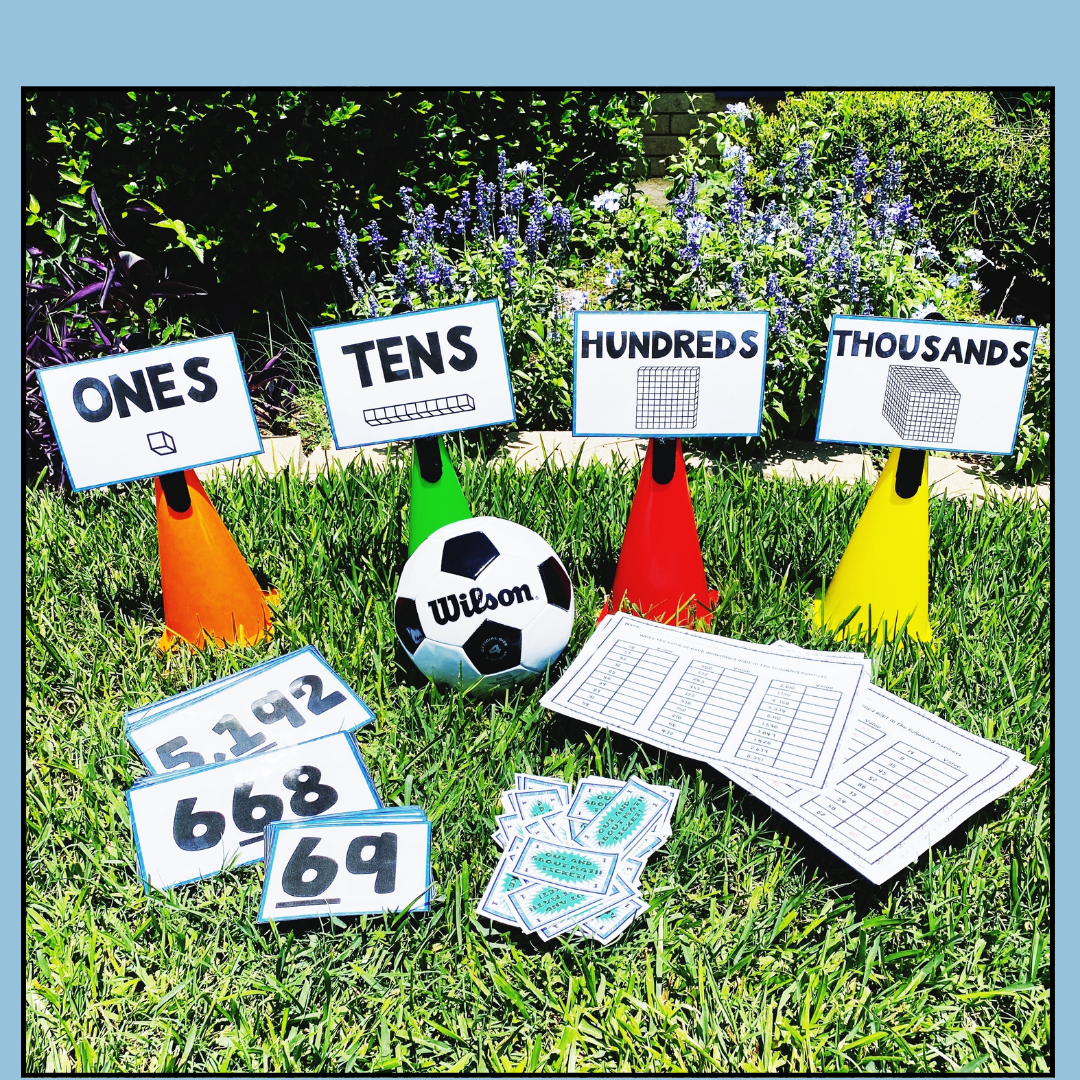
But wait… let me backtrack a minute… Do you feel that your students are ready to compare and order numbers? OR do they need more practice BUILDING NUMBERS and working with place value to help them PREPARE to compare and order numbers? If you’re thinking, “Sure do! They’re STILL having trouble with place value! “… Then you might want to click here to read more about activities that may be helpful!
Table of Contents
Understanding Place Value is the Prerequisite for Comparing and Ordering Numbers.

Place value is the foundation of comparing and ordering numbers. When students know that “600 is more than 514 because the 6 in the hundreds place has a greater value than the 5 in the hundreds place, they’re not guessing — they’re reasoning. It is a foundational skill that carries forward. So… place value is emphasized in all of these engaging games.
8 Hands-On Activities For Comparing and Ordering Numbers
Activity #1: “Comparing and Ordering Numbers” Circle Game

- TEKS alignment: comparative symbols
- Materials: index cards with numbers up to 1,200, dry-erase boards
- How it works:
- Divide class into inside and outside circles, each student holding a card.
- Play music; circles rotate in opposite directions.
- When it stops, paired students compare numbers and record on boards.
- Teacher circulates to check accuracy.
Activity #2: Base-Ten Block Face-Off

- TEKS alignment: place value understanding, comparison symbols
- Materials: base-ten blocks (flats, rods, units), comparison recording sheets.
- How it works:
- Show two sets of blocks representing different numbers.
- Students calculate each set’s value, then compare them using >, <. =.
- Extend by writing number in words and orally stating: “four hundred twenty-three is less than five hundred twelve.
- Extension Activity: Add layers by including expanded for challenges: “Compare 106 + 5 vs. 100 + 11.”
Activity #3: Comparing and Ordering Numbers Roll

- TEKS alignment: using place value to order numbers
- Materials: “Ordering Numbers Roll!” mats, dice, pencil, and answer sheet
- How it works:
- Print out and laminate game mat for use year after year
- Students roll dice and look at the column number they rolled.
- The they read the numbers that are ordered in that column.
- They write the missing number on their worksheet.
- An answer key is also provided for easy assessment or grading
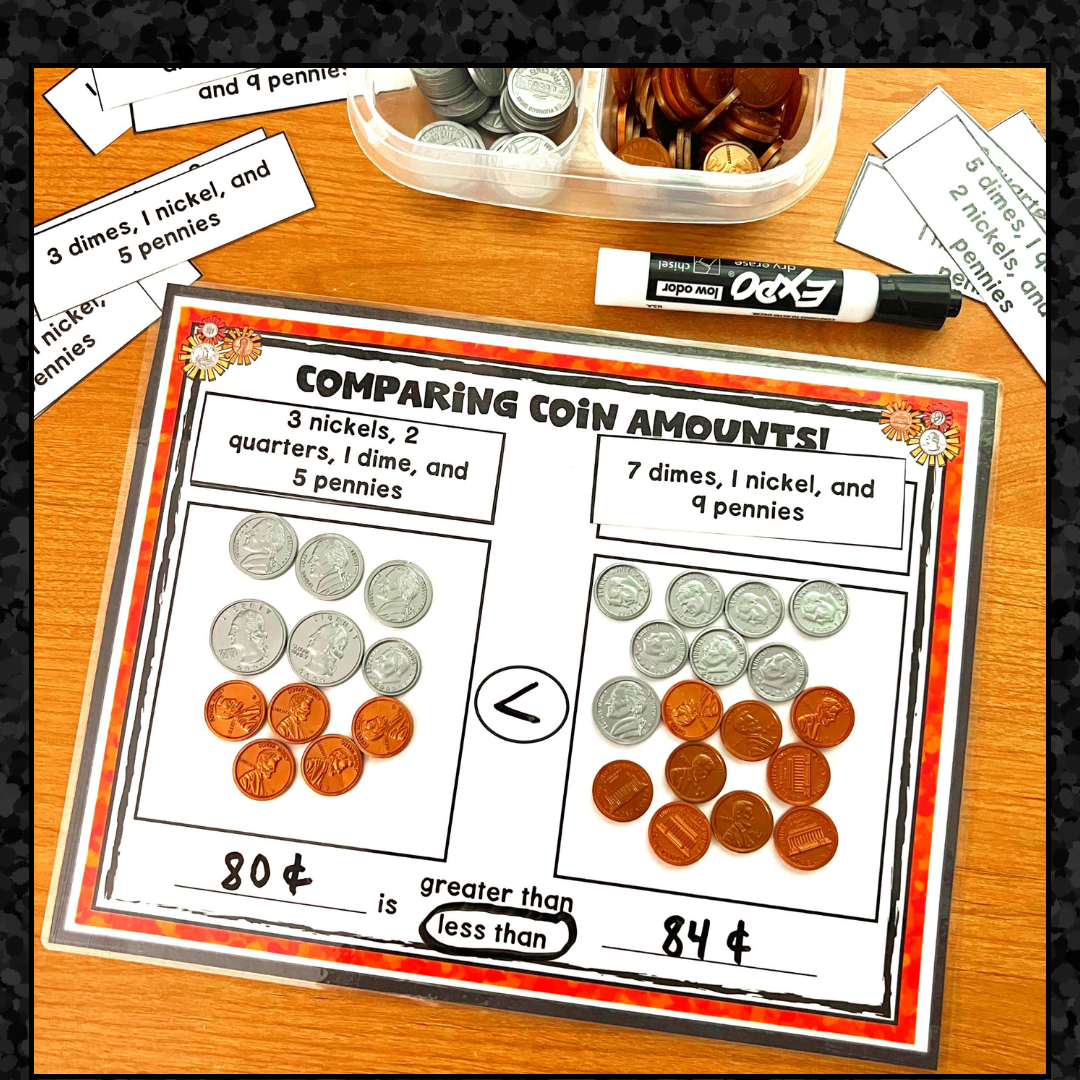
Activity #4: Draw and Compare Numbers Center/Game

- TEKS alignment: comparing and ordering numbers, using comparison symbols
- Materials: Comparing Numbers mats, number cards, dry-erase markers and erasers
- How it works:
- Print and laminate game mat
- Students draw number cards and place them on the mat
- Then they take turns writing the symbol that shows the comparison of the 2 numbers, and circling the comparison words.
- This game can be used in centers, small group intervention, or independent practice!
Activity #5: Comparing and Ordering Numbers Scoot

- TEKS alignment: using place value when comparing and ordering numbers
- Materials: Scoot cards, answer sheets
- How it works:
- Print and laminate scoot cards to be used year after year
- Tape them around the room.
- Each card has a number on the corner.
- Students will look at the numbers on each scoot card as they come to it, and they will order the numbers on their answer sheets.
- They will be comparing and ordering numbers least to greatest or greatest to least.
- For students that need more practice: reuse the game cards in a center or during intervention!
Activity #6: True or False Pocket-Chart Sort
- TEKS alignment: critical thinking, comparing and ordering
- Materials: chart with “True” and “False” cards with comparisons
- How it works:
- Students pick or are given cards like “428 < 482.”
- They sort the cards based on truth and justify their choice verbally.
- Classroom discussion extends learning: “Explain you reasoning.”
Activity #7: FLIP! Comparing and Ordering Numbers Group Game
- TEKS alignment: oral comparative language, ordering skills
- Materials: face-down deck of number cards.
- How it works:
- Create students groups of around 4-6 students
- Spread index cards with numbers on them face down for each group
- When the teacher calls, “FLIP!”, each student flips one card.
- Teacher says “least to greatest” or vice versa
- Students work together to order their flipped cards in front of their group.
- Use 2, 3, or 4-digit numbers on cards to reinforce place value reasoning.
Want to extend this learning? Hand out number cards EVERY time they line up to go to lunch, specials, recess… When I decided to do this religiously, the kids became SO efficient at ordering numbers!
Yes, its a little frustrating at first trying to get them moving in the right number positions. And yes, it’s going take extra time to line up. BUT… If you start with 2-digit numbers at the beginning of the year, and move on as the majority of students are ready, you will be AMAZED at how wonderfully confident most of your students become at ordering numbers! And they also become efficient at checking what their fellow students are doing. They will tell them, “Nope! Your number doesn’t fit between 146 and 162!” And they will tell them why! AND the only thing you need to get ready is your index cards… just write the numbers you choose on them and start handing each student a number as they line up.
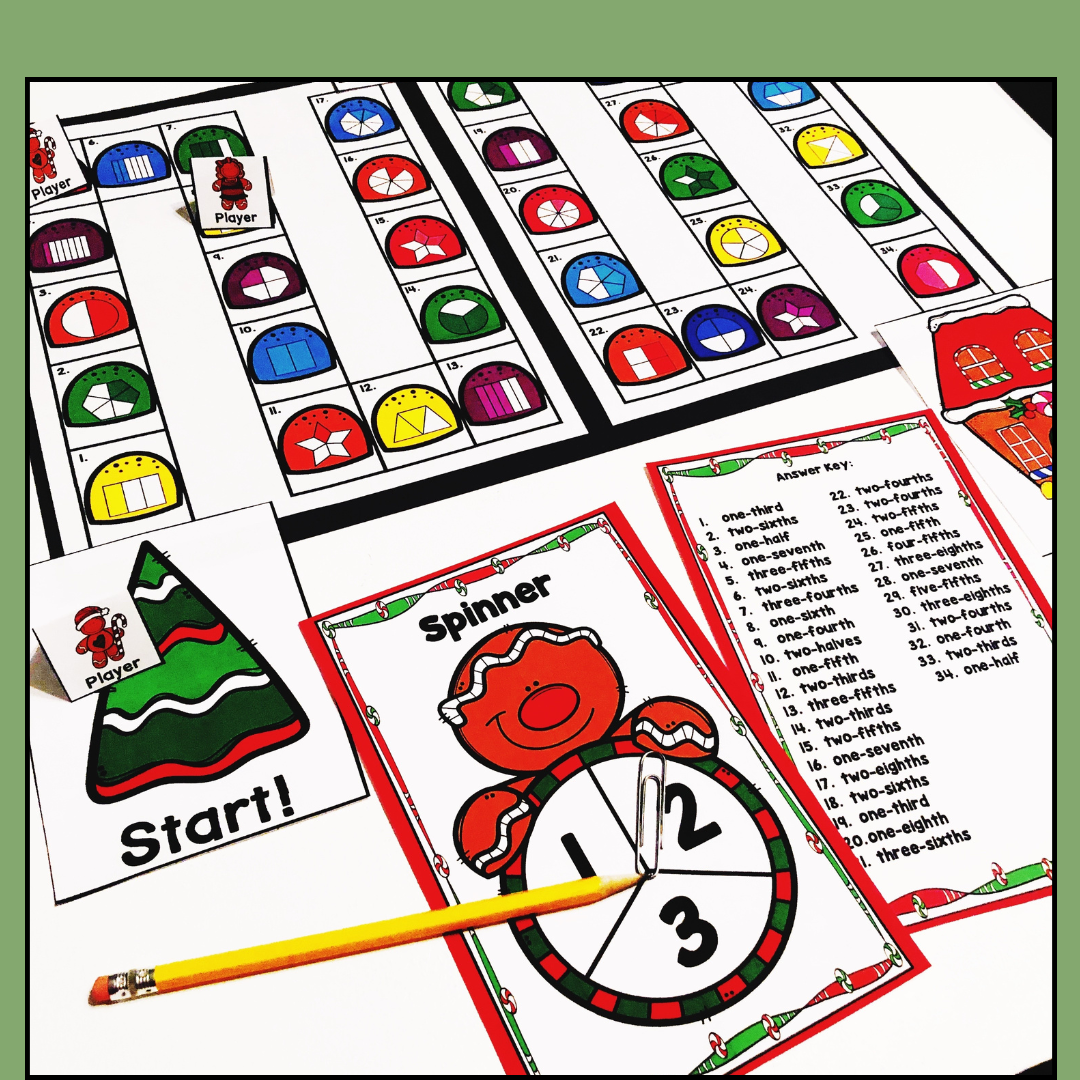
Activity #8: Ordering Numbers Board Game

- TEKS alignment: use place value in comparing and ordering numbers least to greatest or greatest to least.
- Materials: laminated game board set
- How it works:
- Students shuffle cards and place them face down on the gameboard.
- They pick a card and move to that space on the game board.
- They decide if the numbers in that space are ordered least to greatest or greatest to least.
- Then they name the missing number and put a color chip on it in the center of the game board.
- Their partner will check their answer with the answer key.
Final Thoughts
Teaching comparing and ordering numbers doesn’t have to be boring. With the right mix of interactive group lessons, hands-on materials, and engaging resources, your second graders will gain confidence while having fun.

By using these TEKS-aligned activities alongside the Comparing and Ordering Numbers Review Unit, you’re giving your students the tools they need to succeed in math–all while keeping your classroom engaging and low-prep.
Ready to simplify your math lesson planning? Grab the resource here!
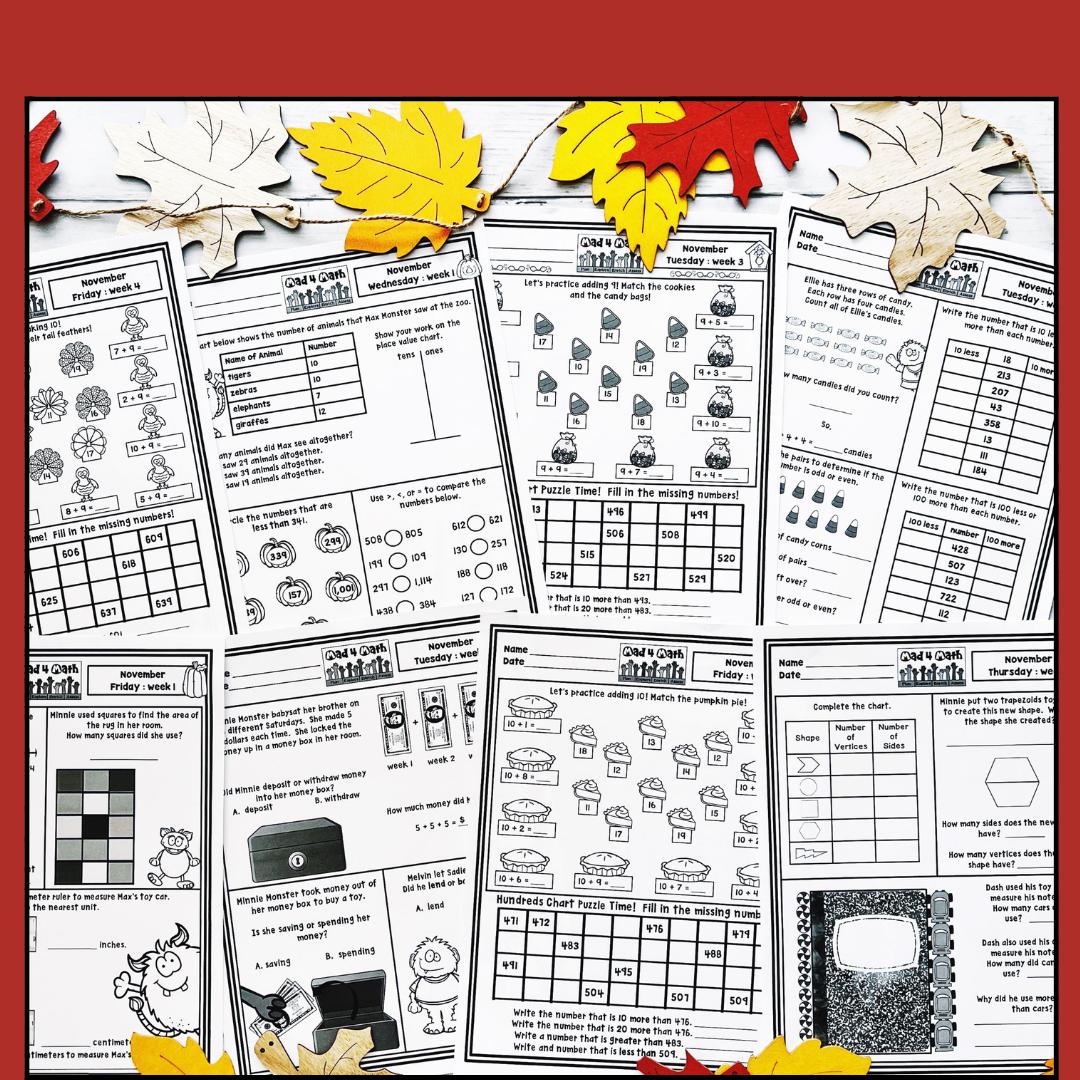
AND If you need math activities that can be incorporated into ANY math curriculum and give your students a deeper understanding of the skills and concepts they are learning, check out this year-long Math Units BUNDLE. It’s on sale for over HALF OFF the price of all of these games sold separately!















One thought on “Comparing and Ordering Numbers: 8 Engaging and Effective Activities!”