
Counting money with your students can seem very tricky. Teaching them to identify and count coins up to one dollar can be LOTS of fun for your students, and it’s easier than you think. With the right mix of hands-on-practice, visuals, and games, your students can master money concepts while meeting the standards!
These standards focus on:
- Identifying coins and their values
- Counting a collections of coins up to one dollar
- Writing money amounts using words, the cent symbol, dollar sign, and decimal point
Below, you’ll find 7 engaging counting money activities, including touchpoint strategies, centers, and games that will get your students excited about learning coins!
Table of Contents
1. Start with Identifying Coins and Their Values

Before students can count coins, they need to recognize coins and their values. Start with real coins or coin posters to help students notice size, color, and design differences. For beginners, introduce touchpoints–a tactile strategy that helps students keep track of coin values.
- Penny: The penny has one line down the center. Students draw a line down the center of pennies that they see and say, “one”– a penny is worth one cent.
- Nickel: The nickel has and big dot drawn in the center. Students touch it and are taught that its worth five.
- Dime: The dime has a big dot on the top, and one more drawn at the bottom. Students touch each dot and count by 5’s.
- Quarter: The quarter has 5 big dots drawn on it. Two at the top, two at the bottom, and one in the middle. Students can use these dots to count by 5s to 25.
- Half Dollar: The half dollar has 5 Xs drawn on it. Two at the top, two at the bottom, and one in the middle. Students use these Xs to count by tens to 50.
Students should start counting money out loud as they touch each point to review the amount of each coin. This method supports number sense and is especially helpful for visual and kinesthetic learners just stating to count money.
2. Use Counting Money Vocabulary Posters and Cards

Introduce new vocabulary before moving into counting money. Use vocabulary posters to display each coin, its name, and value. Then, have students quiz each other using vocabulary cards during centers or transitions.
These visuals reinforce key words like penny, nickel, dime, quarter, and half dollar, helping students quickly recall coin names and values during math activities.
3. Explore Counting Money with Dry-Erase Work Mats

Give students hands-on practice with counting money as you call out money amounts. Help students understand that money amounts can be written 3 different ways: Using words, symbols, and decimals.
4. Read and Learn with “Casey’s Carnival Money” Book

Integrate reading and math with Casey’s Carnival Money! Students follow Casey through the carninval as she spends coins on snacks and game, applying real-world money skills in a story format.
After reading, invite students to write their own “spending stories” using play coins and price tags. This fun literacy tie-in helps students connect money concepts to everyday life.
5. Play the Matching Coins and Their Amounts Board Game

Games make learning stick! In this game, students take turns pulling coin cards from a deck and matching their amounts on the game board. It’s a perfect partner activity or math center game that encourages peer discussion and self checking. Students naturally practice identifying and matching the coin values while having fun!
6. Build Confidence with Counting Coins Puzzles

Challenge students with coin puzzles that mix different combinations. Students match groups of coins to their total value, which strengthens reasoning and problem-solving skills.
Teacher Tip: Encourage students to explain how they counted their coins–sharing strategies builds flexible thinking and math talk.
7. Challenge Students by Having Them Compare Money Amounts

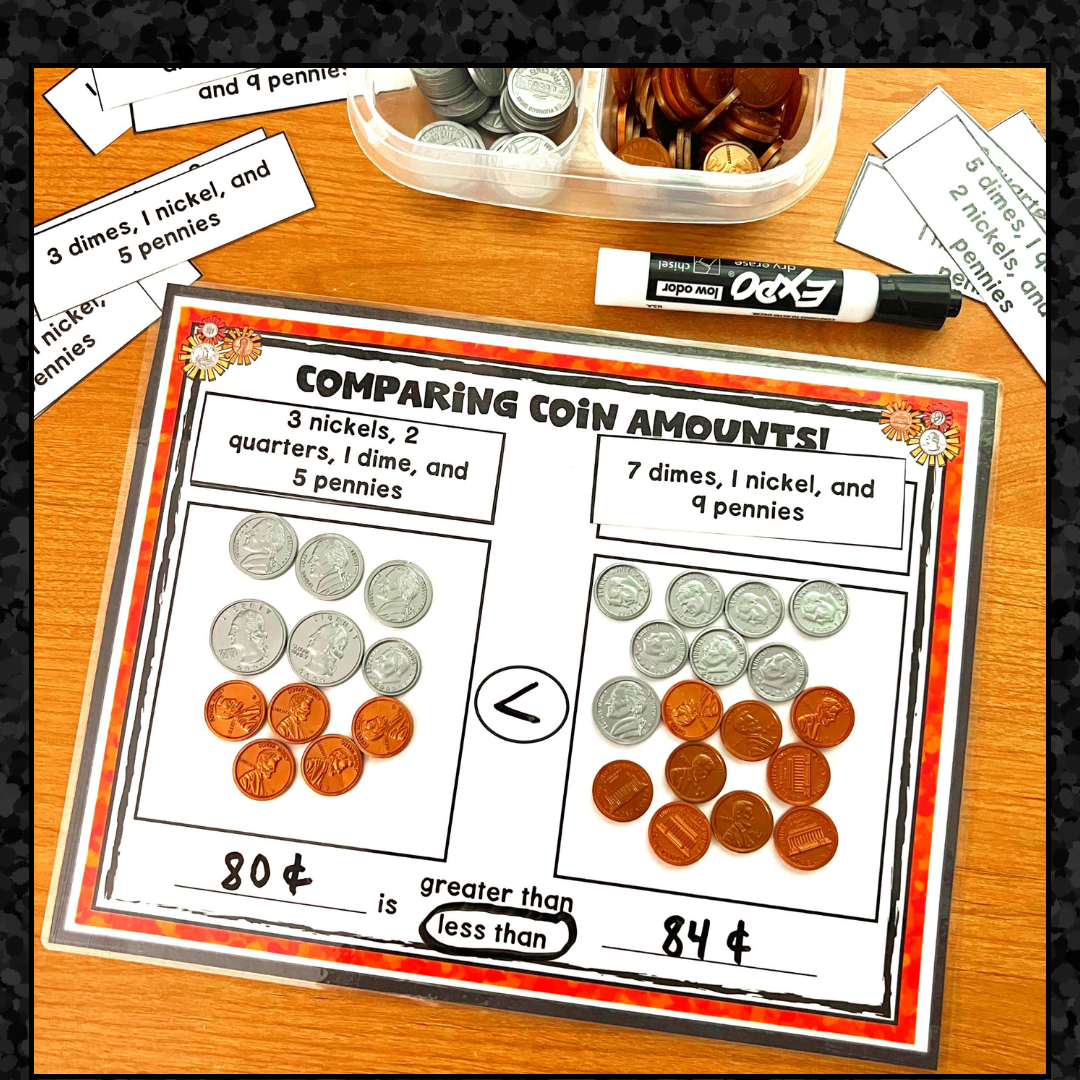
Students work with a partner to sharpen their money counting and comparing skills. They will each draw a card and create the amount on the mat using coins. Then they will take turns comparing the amounts and deciding which amount is greater than or less than and then writing it on the mat. This activity also encourages LOTS of peer checking and discussion. If you have students struggling to compare numbers, click here for more help.
8. Review and Reinforce with Hands-On Centers

Once students have practiced counting money with all the activities above, rotate them through year-round money centers for continued reinforcement.
Students can:
- Identify and count coins up to $1.00
- Write amounts using words, symbols, and decimals
- Practie financial literacy skill in multiple formats
- Strengthen problem-solving and reasoning
These centers can be used for whole-group lessons, partner work, or independent review, giving you flexibility through the school year.
Why These Activities Work
Students learn best when they can see, touch, and talk abut what they’re learning. These money mats, puzzles, vocabulary tools, and games promote hands-on exploration and reasoning – two key skills for long-term success in math.
Your students will:
- Gain confidence recognizing coins
- Master counting coins up to $1.00
- Understand money notation with symbols and decimals
- Have fun while learning a real-life skill!
Get Your Students Excited About Counting Coins!

Bring excitement into counting money with engaging 2nd grade counting coins activities. From touchpoints to puzzles and games, these hands-on learning tools help every student feel successful.
Check out the Counting Coins to One Dollar resource–filled with money mats, puzzles, vocabulary posters and a fun counting game–to make teaching money meaningful and enjoyable for your 2nd graders!
Hands-on Math Activities for the School Year!

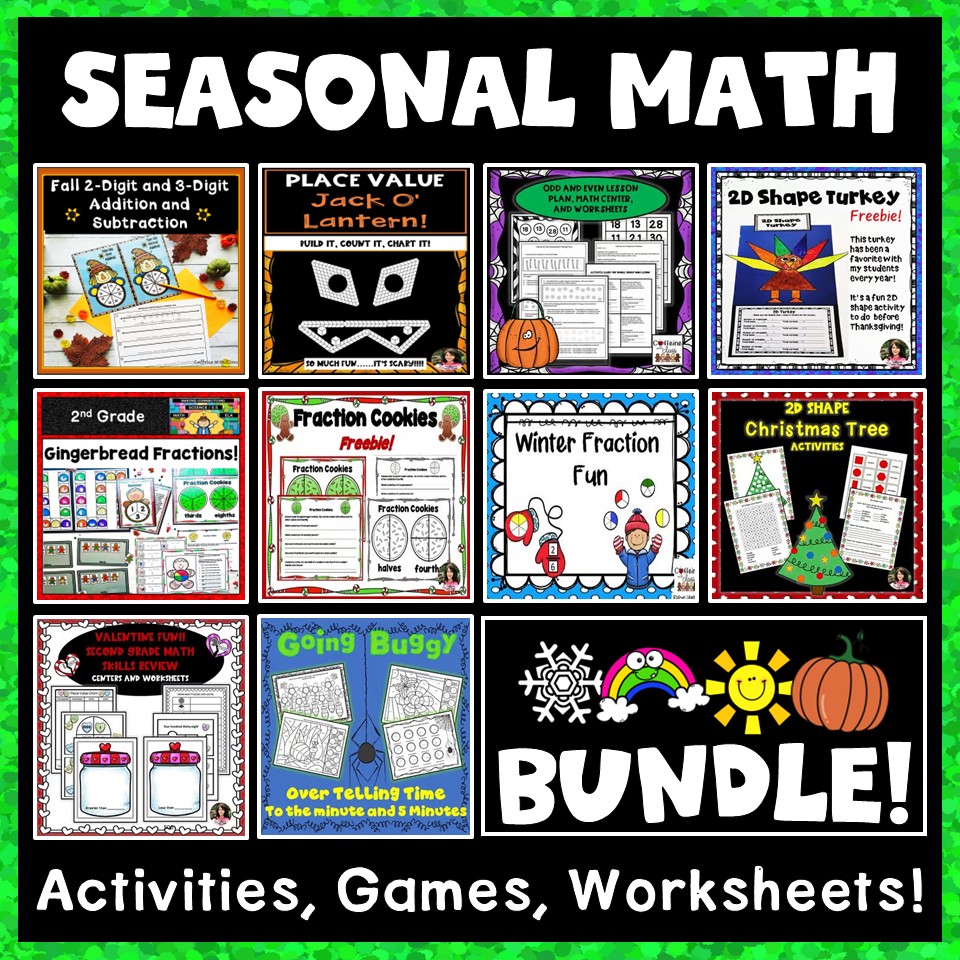
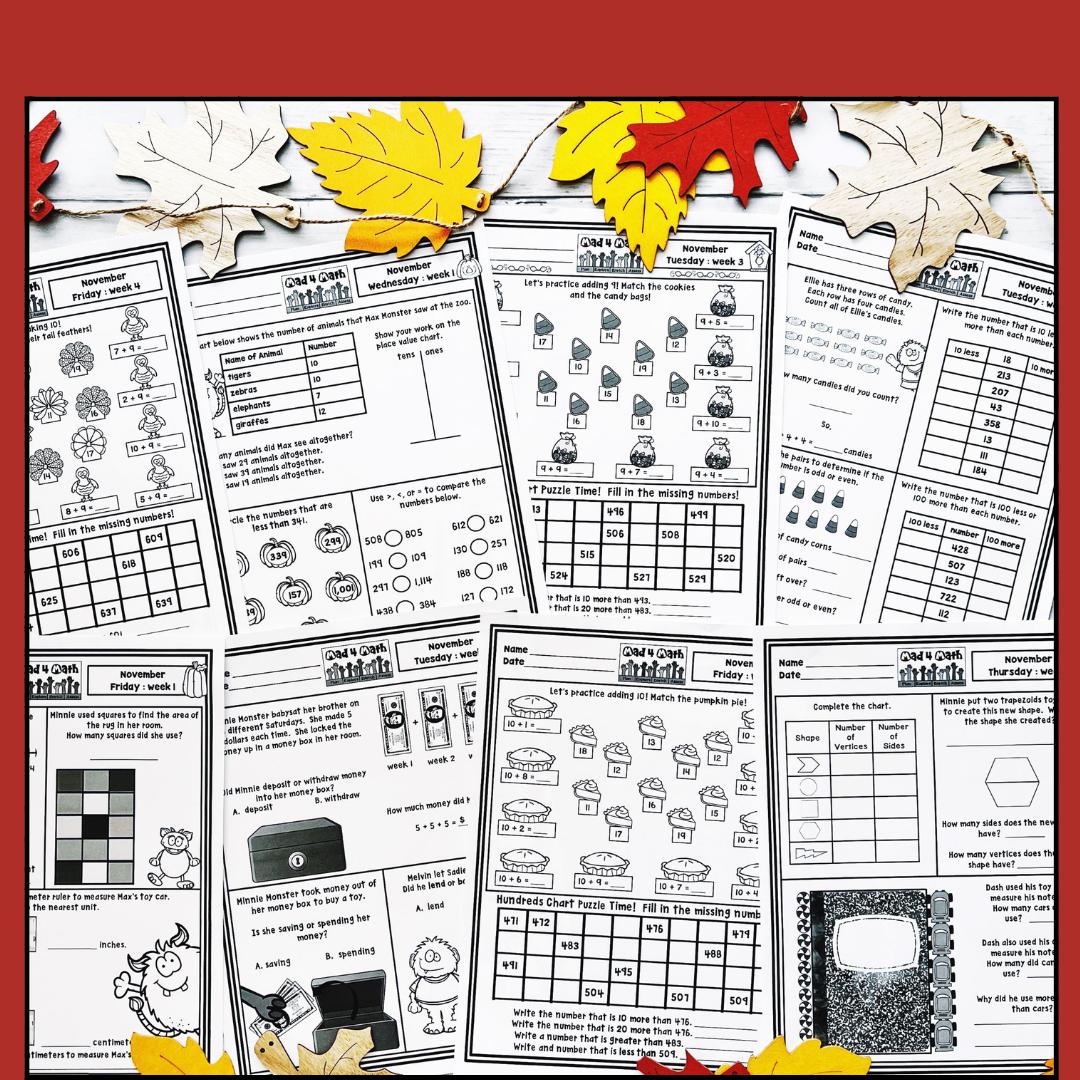
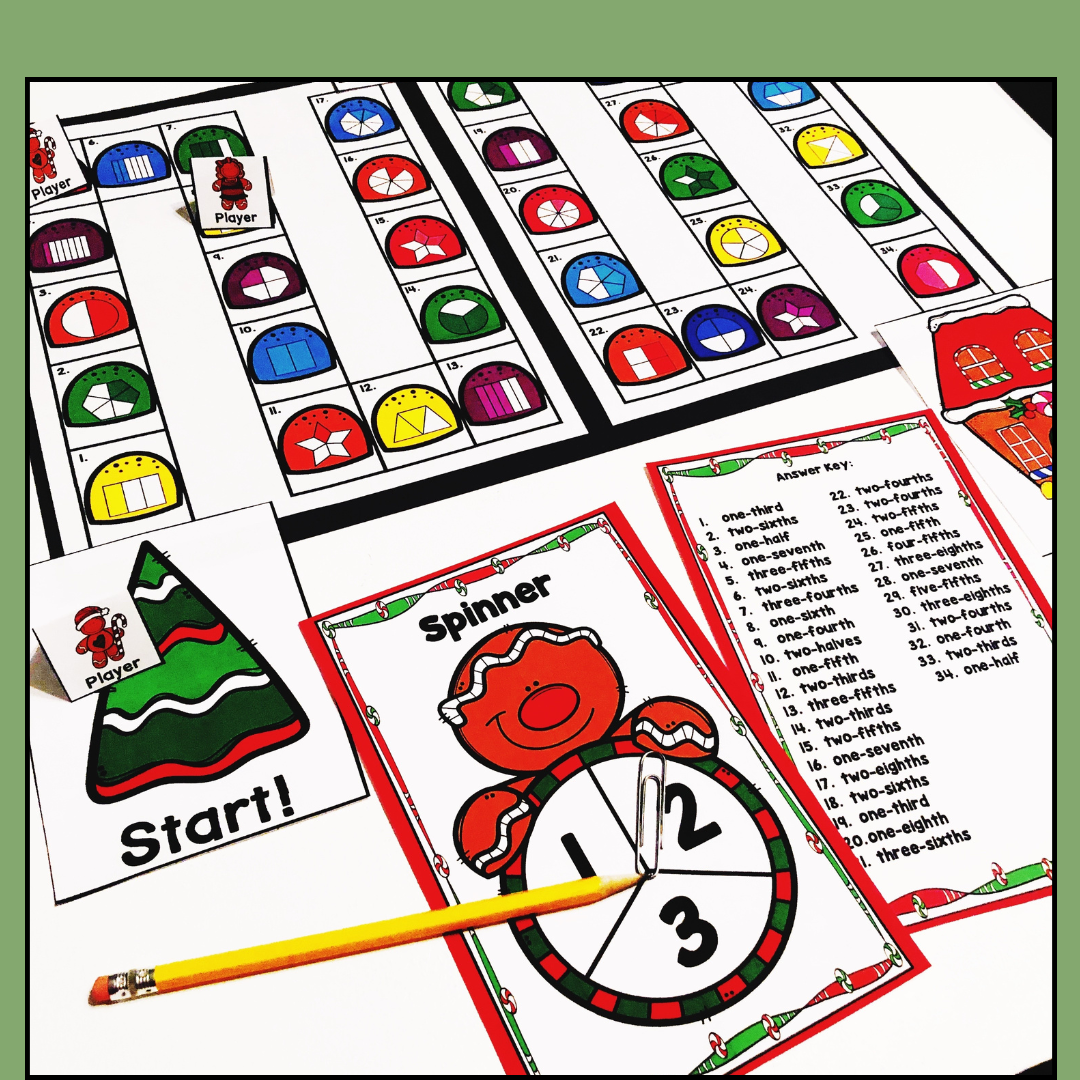
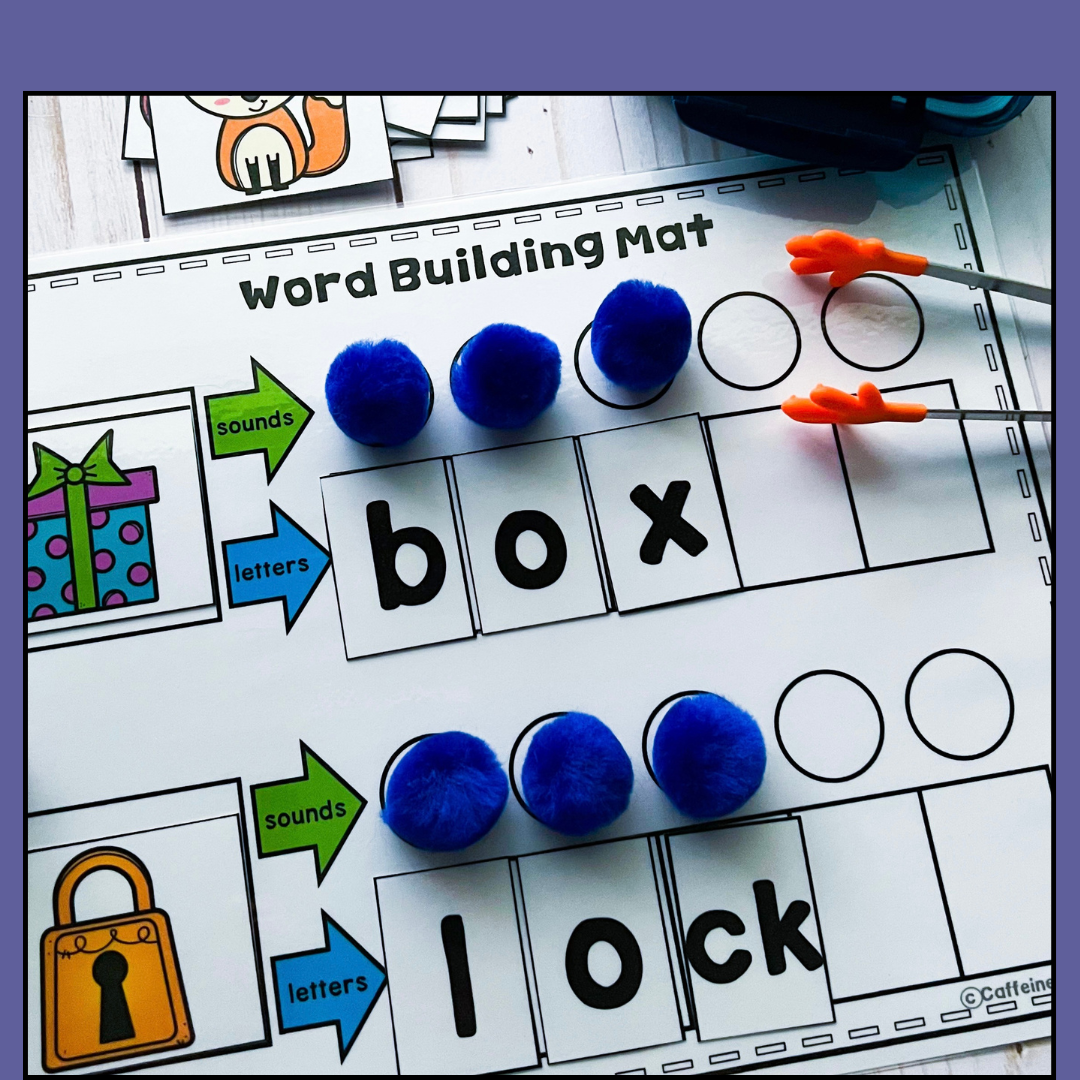
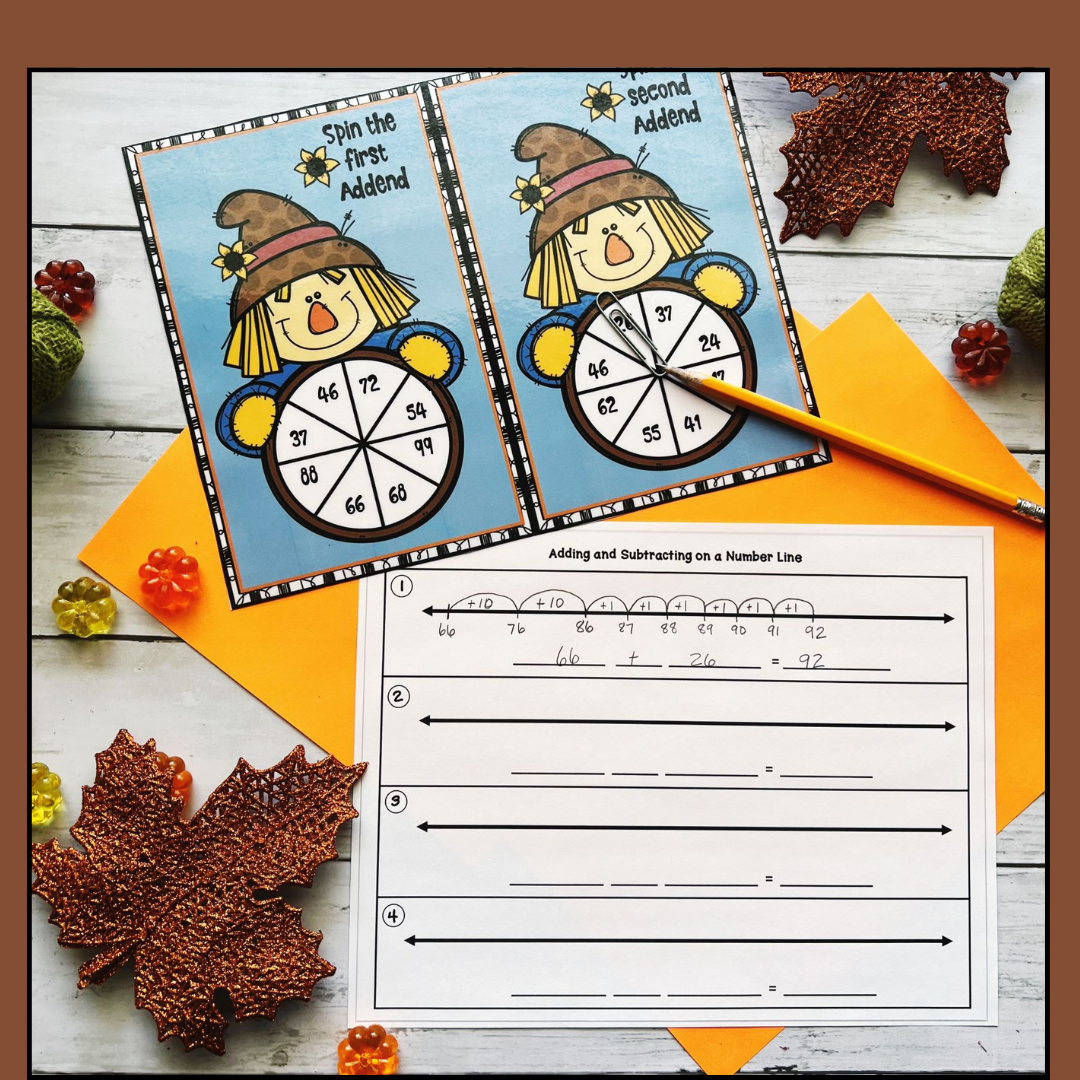
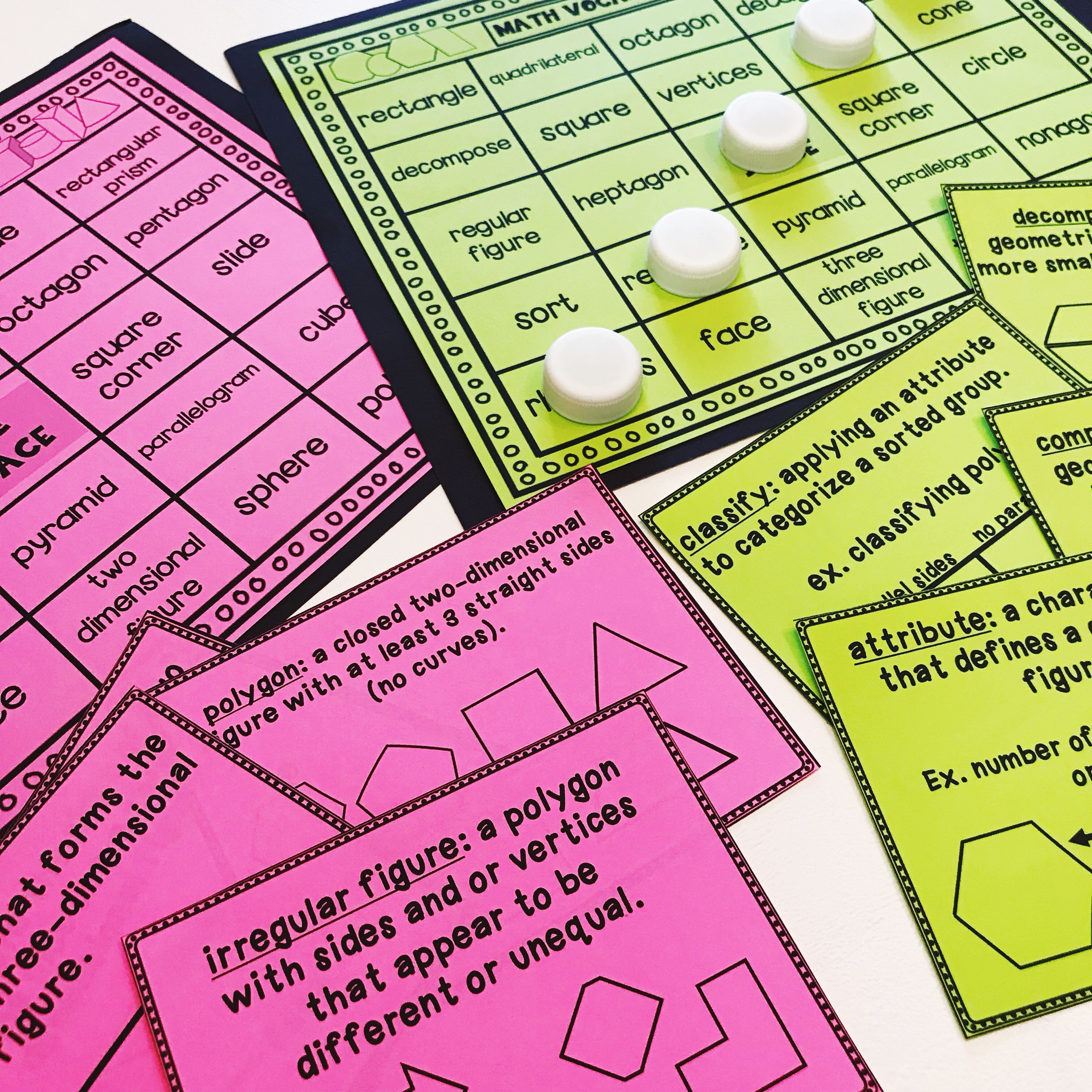
This year-long bundle is filled with hands-on practice with counting coins, place value skills, comparing and ordering numbers, representing numbers, linear measurement, multiplication, arrays, fractions, 2D and 3D shape activities, data and graphing, and telling time!
I hope your students are greatly successful at counting money this year! Practice with this skill using engaging activities can make all the difference!
HAPPY LEARNING!!


















One thought on “Counting Money: 8 Engaging Activities That Will Stick with Your Students”